
The Essential Principles of Web Design
Good web design attracts and retains visitors, while bad design pushes them to leave your site within seconds.
Good web design attracts and retains visitors. Bad design makes them leave quickly. To succeed online, your site must meet your customers’ needs.
Modern design principles are key to an effective website. It must captivate visitors and turn them into customers. Your website is often the first impression potential customers have of you, so it has to be perfect.
Key takeaways
- Effective web design is crucial for online success.
- Modern design principles improve the user experience.
- A well-designed website increases conversions.
- The first impression is often the last.
- Modern web design is essential to stay competitive.
The fundamentals of web design principles for your business
To succeed online, your business must follow solid web design principles. A good website improves the user experience and strengthens your online presence.
Why professional web design matters
Professional web design shows your brand’s credibility. It shows that you are serious and committed to your customers.
Impact on your brand’s credibility
A professional website builds trust and credibility. It helps turn your visitors into loyal customers.
Standing out from the competition
A unique, professional design makes you stand out. It creates a strong, recognizable visual identity.
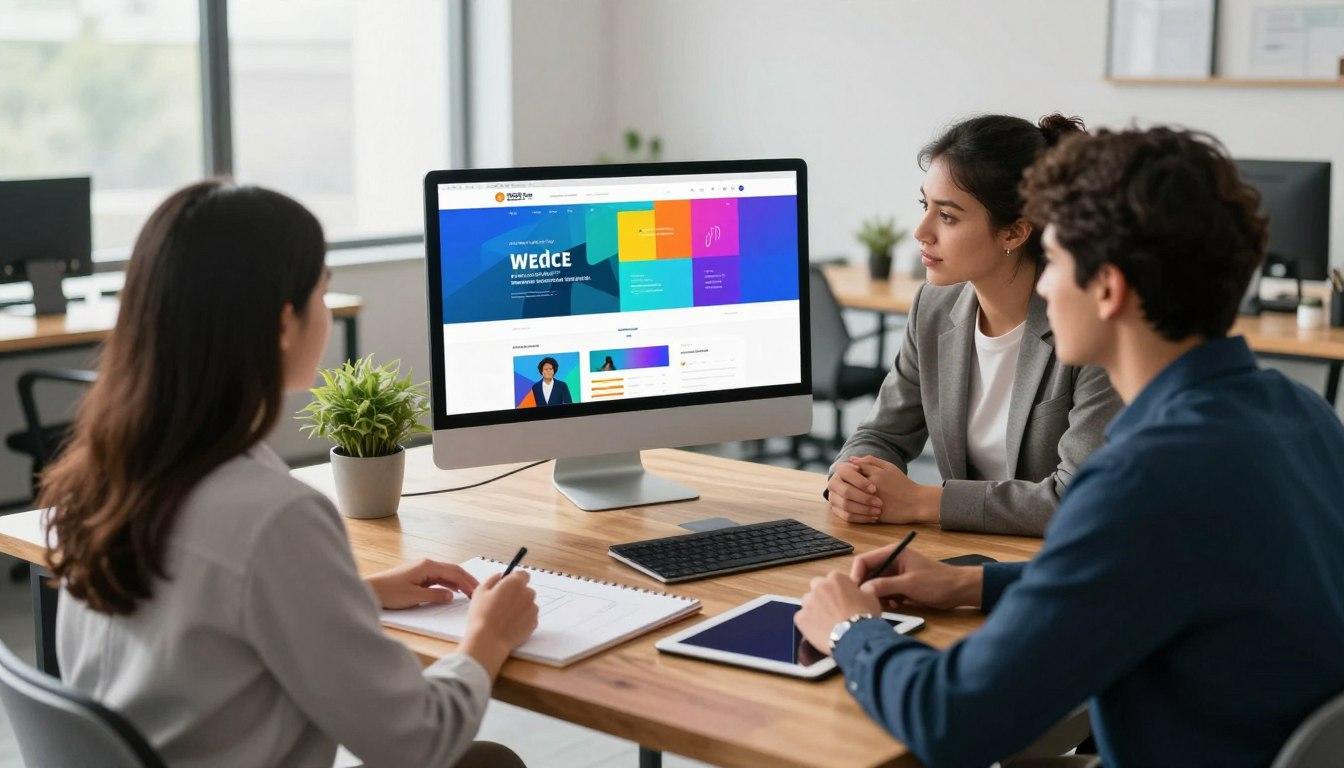
Business goals and strategic design
Aligning your business goals with a design strategy is crucial. It means knowing your audience and creating a smooth user experience.
Alignment with your brand identity
Your website should reflect your brand identity and values. This strengthens brand recognition and creates consistency.
Turning visitors into customers
Strategic design makes navigation easier and encourages the actions you want. This increases your conversion rates.
User experience at the heart of your digital strategy
Your digital strategy rests on an exceptional user experience. To deliver an optimal user experience, it is crucial to focus on several key aspects.
Intuitive navigation and information architecture
Intuitive navigation lets users easily find what they are looking for on your website. It improves the user experience and reduces bounce rates.
Logical menu structure
Organize your menus logically and clearly. Use categories and subcategories to make navigation easier.
Optimized user journey
Make sure the user journey is smooth and intuitive. Avoid unnecessary steps and simplify conversion processes.
Loading time and technical performance
Loading times have a significant impact on the user experience. A slow website can frustrate users and hurt your search rankings.
Optimizing images and resources
Optimize your images and other resources to reduce loading times. Use compressed image formats and lazy-loading techniques.
Accessibility for every user
Accessibility is a crucial part of the user experience. Make sure your website is accessible to everyone, including people with disabilities.
WCAG standards to follow
Follow the WCAG standards to guarantee your website’s accessibility. These guidelines will help you make your content accessible to a wider audience.
Inclusivity and a universal experience
Inclusivity is essential for a positive user experience. Design your website so that it can be used by everyone, whatever their abilities or limitations.

Visual elements and aesthetic principles to respect
When you create a website, think about visual elements and aesthetic principles. They ensure a good experience for the user. Good design combines interesting visual elements with clear aesthetic principles.
Visual hierarchy and readability
Visual hierarchy guides users through your content. It highlights key information and organizes the page logically.
Organizing priority content
Put important information first. Use headings and subheadings for a clear structure.
Spacing and breathing room
Good spacing between elements ensures better readability. Leave space between elements to avoid visual overload.
Consistent colours and typography
Colours and typography must be consistent. This strengthens your brand identity and improves the user experience.
A colour palette suited to your industry
Choose colours that match your brand and your industry. Colours strongly influence how your site is perceived.
Choosing fonts for optimal reading
Typography is essential for readability. Choose clear fonts and limit their number for visual consistency.
Responsive design for every device
Responsive design is crucial today. It ensures a good experience on every device.
Testing on different devices and browsers
Test your site on several devices and browsers. This ensures it works well and offers a consistent experience for everyone.
Conclusion: putting these principles into practice with experts
You now have a good idea of the web design principles that matter for your business. To apply them effectively, it is essential to work with experts in usability and web design.
Perfect Grid is an agency that creates high-performing websites. They follow web design principles. By working with them, you will get a top-quality user experience and a strong online presence.
Perfect Grid’s experts will help you create a website that is easy to use and meets your business needs. Contact us to improve your online presence.
FAQ
What are the basic principles of web design?
Web design rests on user experience, visual hierarchy and responsive design. Usability is also crucial. Together, these elements create an effective, attractive website.
Why is user experience important?
User experience is essential. It influences how people interact with your site. A good experience can increase your sales and strengthen your brand.
What is responsive design and why does it matter?
Responsive design adapts your site to different devices. It is vital for offering a good experience on every screen, including smartphones.
How do I choose colours and typography for my website?
Your choice of colours and typography should reflect your brand. Go for a consistent palette and clear typography. This improves your site’s readability and look.
What are the benefits of modern web design?
Modern design attracts and retains users. It strengthens your credibility and sets you apart from competitors. It can also boost your online sales.
How do I optimize images and resources to improve technical performance?
To improve performance, use compression and reduce file sizes. Choose the right image formats. This speeds up your site’s loading and improves the user experience.
More articles
 01Development
The Importance of a Landing Page
Discover the 5 main benefits of having a landing page dedicated to your product or service, plus our best tips to optimize it and maximize your conversions.
Read more 02Website
What Is a Website?
What a website is, the different types that exist (showcase, e-commerce, blog…) and why it has become essential for any online presence.
Read more